“We should devote all our efforts for the benefit of our souls. We should strengthen our bodies only so that they might aid us in strengthening our souls…”
– Saint Seraphim of Sarov
(The Joy of the Holy)
 Orthodoxy of the Heart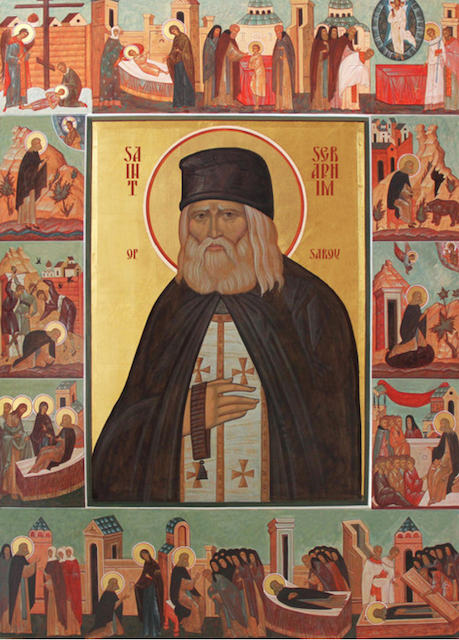
“We should devote all our efforts for the benefit of our souls. We should strengthen our bodies only so that they might aid us in strengthening our souls…”
– Saint Seraphim of Sarov
(The Joy of the Holy)
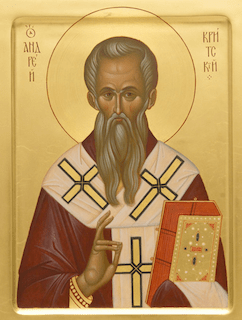
“Come, wretched soul, with your flesh, confess to the Creator of all. In the future refrain from you former brutishness, and offer to God tears of repentance.”
– Saint Andrew of Crete
(The Great Canon)
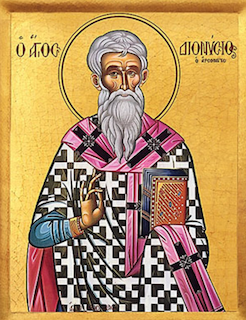
“But let our leader in the discourse be my Christ (if thus I dare name Him) who inspires all hierarchical revelation…The aim of Hierarchy is the greatest possible assimilation to and union with God, and by taking Him as leader in all holy wisdom, to become like Him, so far as is permitted, by contemplating intently His most Divine Beauty.”
– Saint Dionysius
(The Celestial Hierarchy)
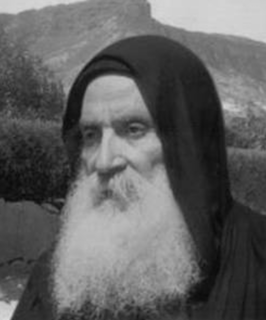
“Christian service fills the spirit with reverence, love and humility.”
– Fr Matthew the Poor
(If you Love Me)
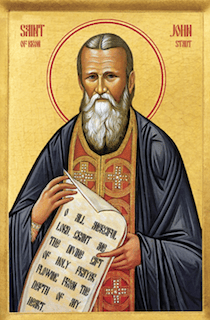
“Do not despair…Had you not lived piously and endeavored to become united to God, the enemy would not have attacked and tormented you.”
– Saint John of Kronstadt
(from My Life in Christ)
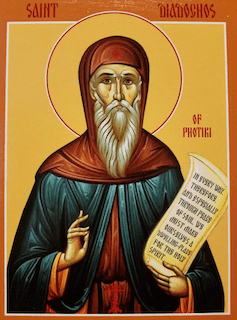
“…he who only believes and does not love, lacks even the faith he thinks he has: for he believes merely with a certain superficiality of intellect and is not energized by the full force of love’s glory.
The chief part of virtue, then, is faith energized by love.”
– Saint Diadochos of Photiki
(Chapter 21, of the One Hundred Chapters)
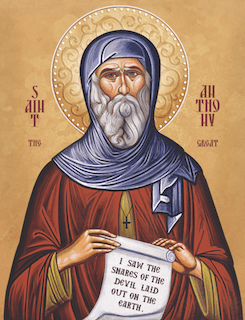
“A time is coming when men will go mad, and when they see someone who is not mad, they will attack him saying,
‘You are mad, you are not like us.”
– Saint Anthony the Great
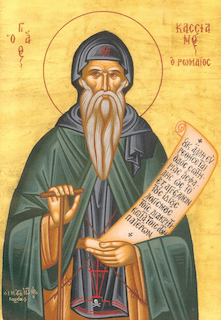
“No matter what provokes it, anger blinds the soul’s eyes, preventing it from seeing the Sun of Righteousness.”
– Saint John Cassian
(The Philokalia:
The Complete Text (Vol. 1),
“On the Eight Vices: On Anger”)
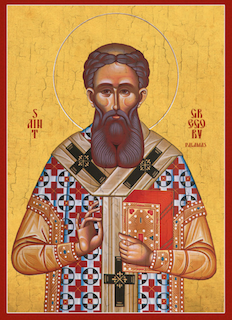
“The mind which applies itself to apophatic theology thinks of what is different from God. Thus it proceeds by means of discursive reasoning. But in the other case, there is union. In the one case, the mind negates itself together with other beings, but in the other there is a union of the mind with God.
It is of this that the Fathers speak when they say,
‘The end of prayer is to be snatched away to God.’
This is why the great Denys says that through prayer,
we are united to God.”
– Saint Gregory Palamas
(Triads)
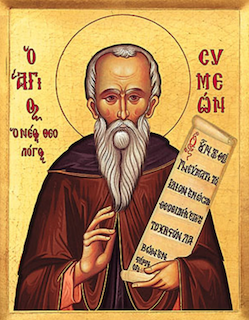
“We shall not be deprived THEN of knowing or seeing, but…according to the measure which each has of the radiance and vision of light, both the knowledge and vision of God, and the recognition and knowledge of one another shall grow ever greater and more clear in joy inexpressible and rejoicing forever and ever.”
– Saint Symeon the New Theologian
(First Ethical Discourse)
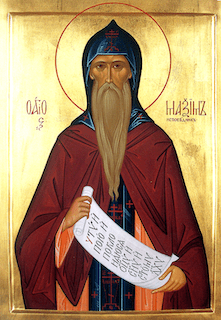
“The person who loves God cannot help loving every man as himself, even though he is grieved by the passions of those who are not yet purified. But when they amend their lives, his delight is indescribable and knows no bounds.”
– Saint Maximus the Confessor
(Four Hundred Texts on Love)
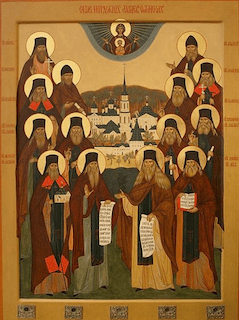
“Besides the written Lives, and the many letters of spiritual instruction, a beautiful and powerful prayer was left to us by the holy elders of Optina. This prayer has become so essential to many people’s everyday lives that they often paste it into their prayer books, to be read every day along with the other morning prayers.”
-orthochristian.com

 Orthodoxy of the Heart
You must be logged in to post a comment.